
Table of Contents
Working from home has settled into a permanent feature of Australian work life. The ATO’s deduction framework has also settled, with two clear methods for 2025-26: the 70-cent fixed rate, or actual cost.
Below is a clear 2026 guide to what you can claim, the records you need, and how to choose between the two methods.
The 70-cent fixed rate method
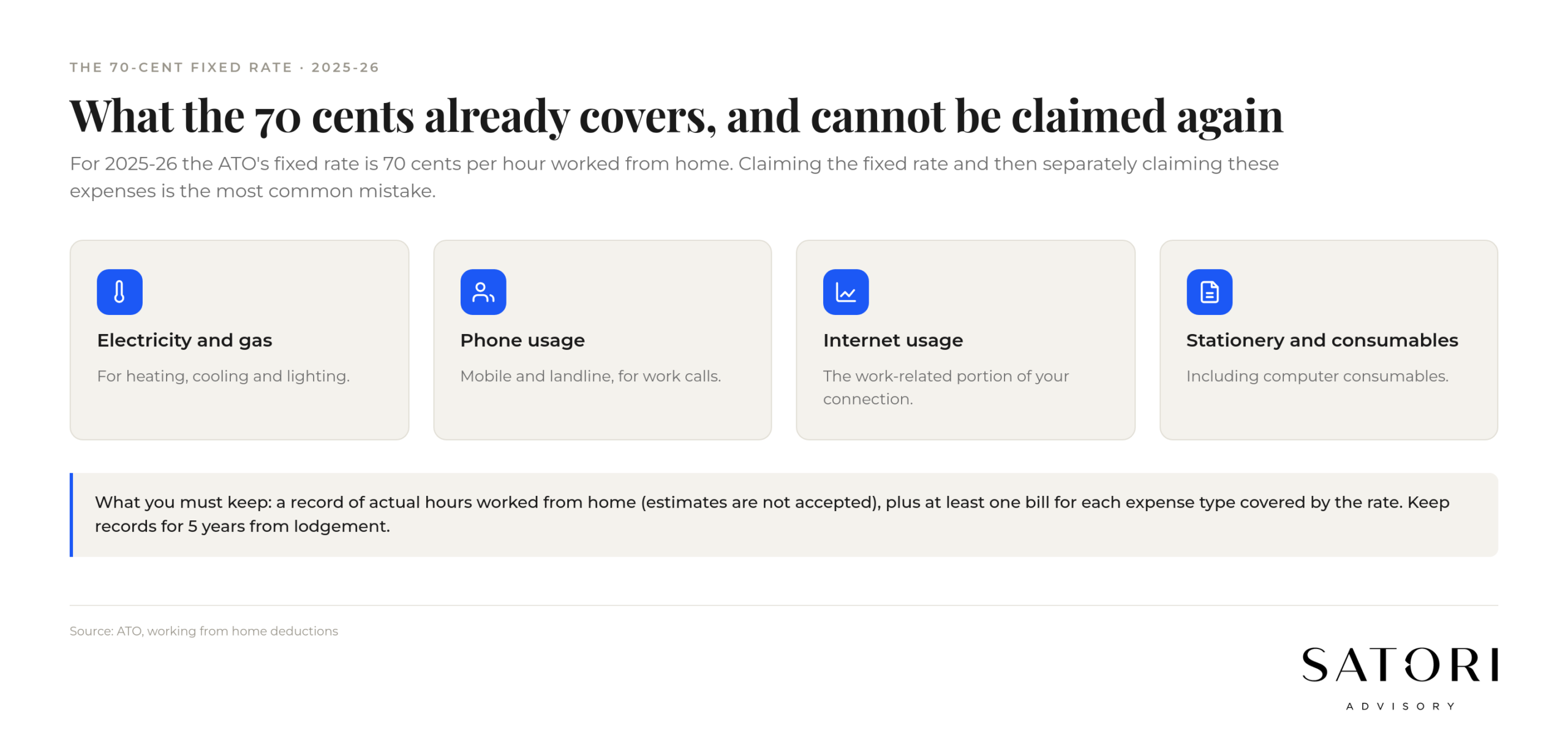
For 2025-26 the ATO’s fixed rate is 70 cents per hour worked from home.
What the 70 cents covers (you cannot separately claim these):
Electricity and gas for heating, cooling, lighting.
Phone usage (mobile and landline) for work calls.
Internet usage for work.
Stationery and computer consumables.
What you must keep:
A record of actual hours worked from home (estimates not accepted). A diary, calendar, timesheet, roster, or time-tracking app works.
At least one bill for each expense type covered by the rate (one electricity bill, one internet bill etc.).
The actual cost method
You can ignore the fixed rate and instead calculate the actual additional expenses incurred from working at home.
Three steps for each running expense (electricity, gas, internet, phone):
Total your actual annual cost.
Calculate the work-related portion using a documented method (a 4-week diary that you then apply to the year, a hours-based apportionment, or a floor-area-based apportionment).
Apply the percentage to the annual cost.
The actual cost method generally produces a bigger deduction if you have a dedicated home office and high work-related usage. The fixed rate is simpler if your WFH pattern is irregular.
What you can claim separately under both methods
Depreciation on assets used for work. Computers, monitors, printers, desks, chairs.
Items costing $300 or less with 100% work use: immediate deduction in the year of purchase.
Items costing more than $300 or used partly for personal purposes: depreciated over the asset’s effective life, with work-related portion claimed each year.
What you cannot claim
Occupancy expenses (rent, mortgage interest, property insurance, rates) are generally not deductible for employees, even if you work from home full time.
Sole traders whose home is their principal place of business can claim a portion of occupancy expenses, but doing so affects the CGT main residence exemption when you sell.
Personal-use portion of any expense. The ATO is firm on apportionment.
100% of mobile phone or internet bills if you also use them personally. The ATO’s audit work shows this is the most common over-claim.
Common WFH deduction mistakes
Claiming the fixed rate AND separately claiming electricity, phone, internet. The fixed rate covers those.
Claiming 100% of personal phone or internet when both are also used personally. Apportionment is required.
Claiming rent or mortgage interest as an employee. Occupancy expenses are not available to employees, only to sole traders whose home is the principal place of business.
Estimating hours instead of recording them. The ATO requires actual records, not estimates.
Forgetting that occupancy claims by a sole trader can erode the main residence CGT exemption on sale.
Which method produces a bigger deduction?
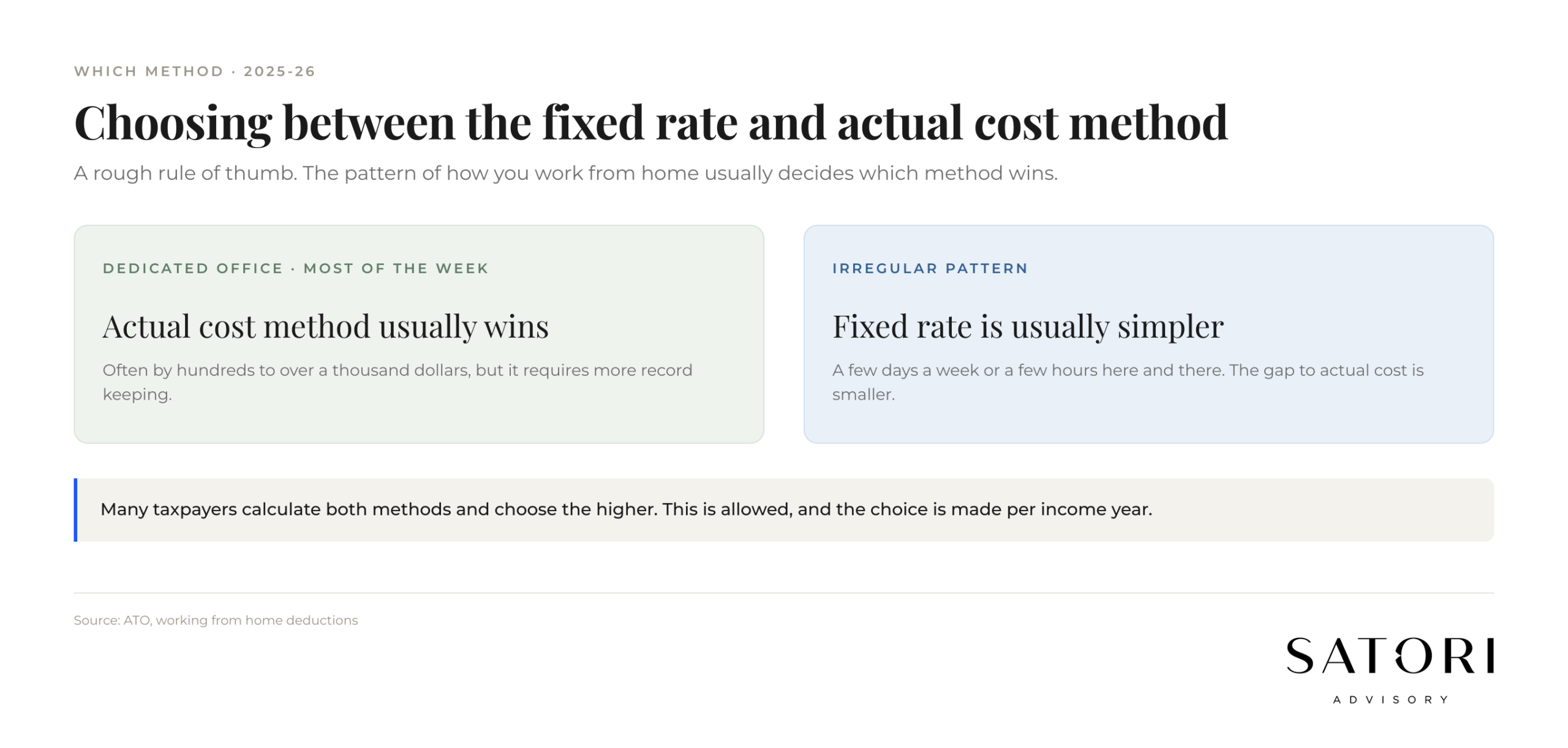
A rough rule of thumb.
If you have a dedicated home office and work from home most of the week, the actual cost method usually wins (often by hundreds to over a thousand dollars).
If your WFH pattern is irregular (a few days a week, a few hours here and there), the fixed rate is usually simpler and the gap to actual cost is small.
Many taxpayers calculate both methods and choose the higher. This is allowed; the choice is made per income year.
Record-keeping that survives an audit
Two things the ATO will ask for if your WFH claim is reviewed.
Proof of hours worked from home. A diary, timesheet, calendar, or time-tracking app log. Estimates are not accepted.
Proof of the underlying expenses. At least one bill for each expense type used in the calculation (electricity, gas, internet, phone).
Keep records for 5 years from the date of lodgement.
Sole traders running a business from home
If your home is your principal place of business, you have access to a wider range of deductions than employees.
Identifiable area requirement: the ATO looks for an identifiable area of your home used for business (a dedicated room or clearly defined area).
Occupancy expenses available: a portion of rent, mortgage interest, property insurance, rates. Calculated as total expenses × floor area used for business × percentage of year used.
CGT impact: claiming occupancy expenses can reduce the CGT main residence exemption when you sell. You may need a property valuation at the time business use began.
For most sole traders, the additional occupancy deduction is worth the CGT trade-off. For others (especially those expecting strong capital growth on the home), it is not. Get advice.
What to do next
Calculate both methods for your 2025-26 situation and choose the higher.
Set up an hours record now if you have not already. A simple weekly calendar entry takes seconds and survives audit review.
If you are a sole trader running a business from home, get specialised advice on whether to claim occupancy expenses (especially if your home is in a strong capital growth area).
How Satori Advisory works
At Satori Advisory we integrate your tax, business, wealth and lending as a prosperity engine, aligned with what matters most to you. With a clear roadmap, informed by data and backed by decades of strategic experience, we simplify the complex. We don’t offer pre-packaged solutions. We deliver tailored, end-to-end advice that reflects your reality and ambitions. You’ll work directly with senior advisers who listen deeply, think boldly and act with purpose. Feel cared for by our trusted team and curated network of financial and business specialists, as we empower you to make smart decisions and realise your potential, powered by numbers.
Frequently asked questions
What is the work from home fixed rate for 2025-26?
70 cents per hour worked from home. It covers electricity, gas, phone, internet, and stationery in a single rate.
Can I claim WFH and other expenses?
Under the fixed rate method, you cannot separately claim electricity, gas, phone, internet, or stationery. You CAN separately claim depreciation on assets like computers, monitors, printers, desks, and chairs under either method.
What is the actual cost method for WFH deductions?
Calculate the actual additional expenses from working at home, apply a documented work-related portion (using a diary, hours, or floor area), and claim the work-related amount. Generally produces a bigger deduction if you have a dedicated home office and high work-related usage.
Do I need a dedicated work area to claim WFH deductions?
Not for the fixed rate method, you just need to be working from home. For occupancy expenses (rent, mortgage interest) you need a dedicated area, AND your home must be your principal place of business (which means employees generally cannot claim occupancy expenses).
What records do I need to keep for WFH deductions?
An actual record of hours worked from home (timesheet, diary, calendar, or time-tracking app), at least one bill for each expense type covered, and receipts for any depreciating asset you claim. Keep records for 5 years from the date of lodgement.
Can I claim my rent or mortgage interest if I work from home?
Employees: generally no. Occupancy expenses are not available to employees even when you work from home full time. Sole traders: yes, if your home is your principal place of business. Note that claiming occupancy expenses affects the CGT main residence exemption when you sell.
Is the WFH 70-cent rate the same as last year?
Yes. The 70 cents per hour applies for the 2025-26 income year and is unchanged from 2024-25. The ATO has not announced a new rate for 2026-27 yet.
Ready to talk?
If you would like a calm, no-pressure conversation about how this applies to your specific situation, we are here to help.
Please feel free to get in touch on 1300 925 081 or send an email to [email protected] if you’d like to book in a chat on the above or on other matters.
Disclaimer
This article contains general information only and has been prepared without considering your objectives, financial situation or needs. It is not personal financial advice, taxation advice or legal advice and should not be relied upon when making financial decisions. Before acting on any information, consider its appropriateness to your circumstances and seek professional advice where appropriate.